
Spread protein across meals
180 lb×0.82+8=156g
Estimate a daily protein range sized to body weight, activity and appetite changes, then split it into meals you can actually use.
Drag the slider or type a number.
A steady baseline of protein.
Protect lean mass while losing weight.
Training hard or very active.
How active are you most days?
Classic breakfast, lunch and dinner.
A protein snack to top up the day.
Easier when appetite is low.
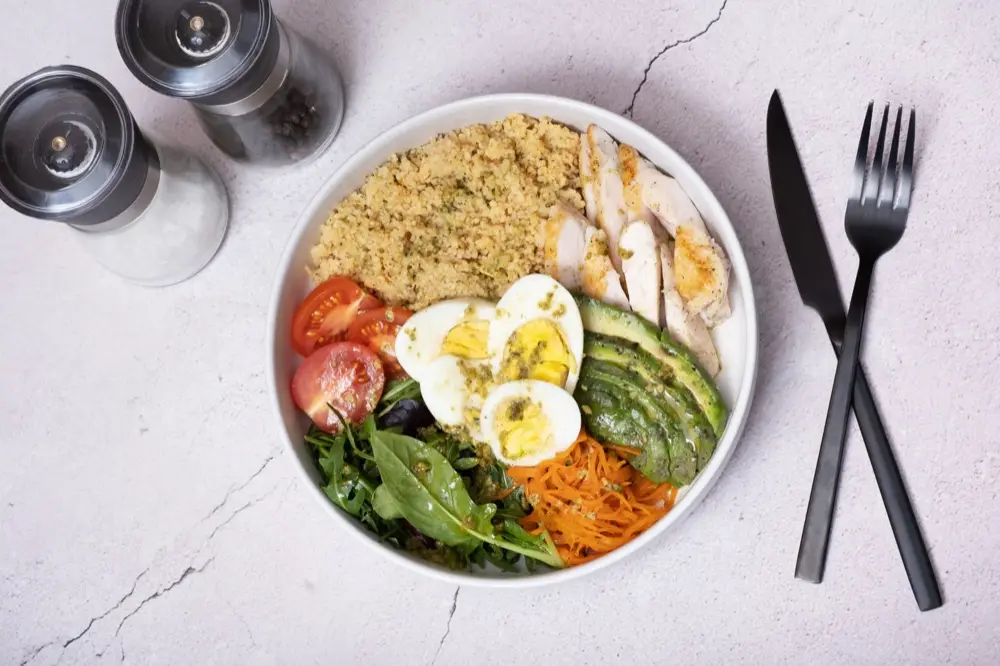
Eggs, Greek yogurt, tofu scramble or protein oatmeal.
Chicken, fish, beans, lentils, cottage cheese or tempeh.
Keep it simple when appetite is lower: soup, bowl or leftovers.
Use only if meals feel too large or nausea makes big portions hard.
Use this as a planning anchor. Medical conditions can change protein needs, so ask your clinician if you are unsure.
Planning notes
Protein planning
The protein calculator gives a simple daily target based on body weight, goal and activity. It is meant to support satiety and meal planning, especially when appetite changes.
Treat the number as a daily planning anchor. For most people, the useful part is not hitting the exact gram total; it is building enough protein into breakfast, lunch and dinner so cravings are not driven by under-eating.
People using or comparing GLP-1 medications often need practical structure around smaller meals, nausea, satiety and muscle preservation. A protein target turns that concern into a daily planning range.
Next step
Use the result as a starting point, then move to the page that helps you verify the next decision.
Sources
NIH/NLM consumer overview of GLP-1 agonists, appetite effects, side effects and clinician follow-up context.
CDC guidance on protein foods, vegetables, fruits, whole grains, healthy fats and limiting added sugar and sodium.
Verify Before Purchase